Dr. Paul “Doc” Sable
A Conversation with Dr. Paul Sable
2026 Monterey Car Week
The following three questions and answers are adapted from the Dual-Ghia Registry’s interview with “Doc” Sable during Monterey Car Week at Pebble Beach. They offer a glimpse into Doc’s decades of research, firsthand interviews, and knowledge of Dual-Ghia history. Watch the full video interview for additional stories and insights into these remarkable automobiles.
1. How many Dual-Ghia convertibles were actually produced?
Approximately 100 Dual-Ghia convertibles were produced, despite published claims suggesting higher numbers. My research included personal interviews with Paul Farago, vice president of Dual-Motors, and individuals who worked on the automobiles.
One former employee recalled that Dual-Motors purchased 50 Chrysler Poly engines and 50 Chrysler Hemi engines, supporting a production figure of approximately 100 automobiles. Chassis numbering and decades of research into surviving examples further support that conclusion.
Of those produced, approximately 72 were known to survive at the time of our interview.
2. Who decided who could purchase a Dual-Ghia, and why was Sammy Davis Jr. unable to obtain one?
Eugene Casaroll, president of Dual-Motors, personally controlled the allocation of Dual-Ghia automobiles. These were not ordinary production cars available to anyone who walked into a dealership. Casaroll wanted the automobiles distributed across the country and personally approved prospective buyers.
Although Dual-Ghias became associated with Hollywood celebrities and members of the Rat Pack, Sammy Davis Jr. was reportedly denied the opportunity to purchase one.
According to information I received directly from the Casaroll family, Eugene Casaroll did not want Sammy Davis Jr. to own a Dual-Ghia. The family confirmed the account, although the interview did not establish Casaroll’s specific reason for refusing him.
The incident illustrates how personally controlled and selective Dual-Ghia ownership could be during the 1950s.
3. What makes the Dual-Ghia historically significant, and why is preserving its provenance so important?
I consider the Dual-Ghia the “Duesenberg of the ’50s.” It combined Italian coachbuilding by Carrozzeria Ghia with American engineering, producing an exceptionally distinctive luxury automobile.
Having owned 23 Dual-Ghias over the years, I became acquainted with many original owners and began compiling an informal registry to preserve their histories.
Through interviews, factory information, ownership records, and decades of research, I have maintained individual files on approximately 70 surviving automobiles. Some contain extensive documentation, while others remain incomplete.
Preserving these records is essential because ownership histories can be lost, particularly when automobiles change hands. The goal is to distinguish documented history from stories that have been repeated so frequently that they are mistakenly accepted as fact.
Editorial note: These answers are edited paraphrases of Dr. Sable’s interview remarks, not verbatim quotations.
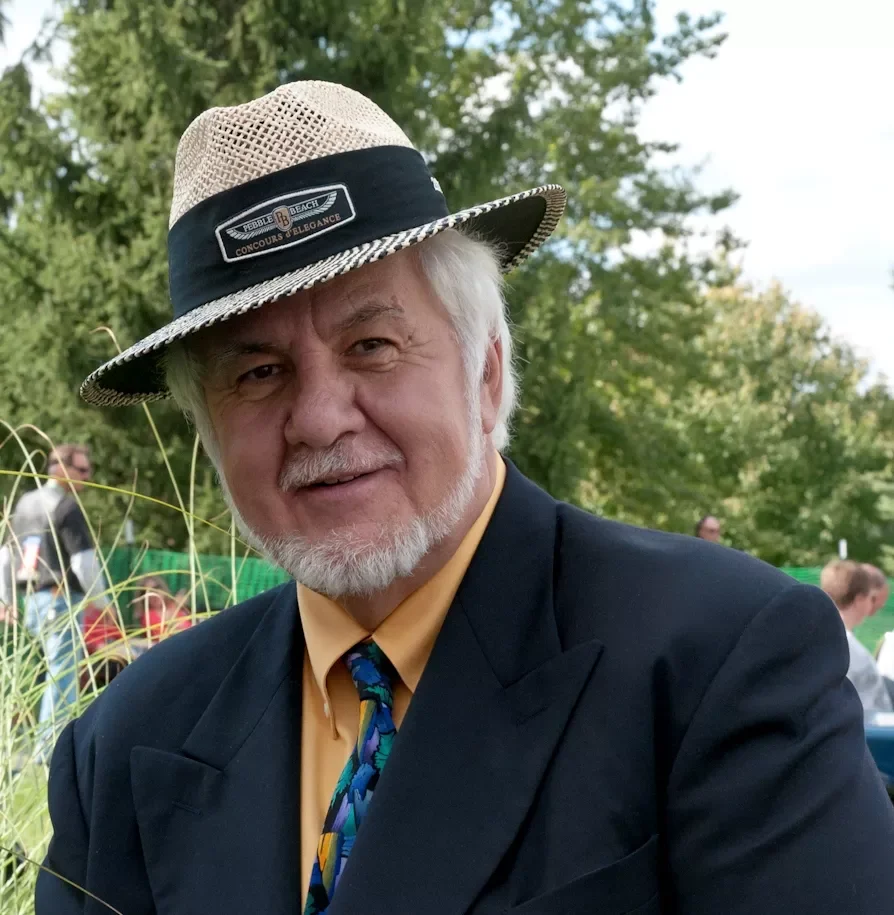
Dr. Paul Sable
Dr. Paul "Doc" Sable is one of America's most respected automotive historians, writers, collectors, and concours judges. Over a distinguished career spanning more than four decades, he has served as Chief or Honorary Chief Judge at 87 concours events during a 30-year judging career, including many years at the prestigious Pebble Beach Concours d'Elegance, The Amelia, and Hilton Head Concours d'Elegance. Today, he is equally committed to fostering the next generation of enthusiasts by encouraging greater participation of young adults in concours judging.
Widely recognized as the foremost authority on the Dual-Ghia marque, Dr. Sable has devoted more than forty years to researching, documenting, and preserving the history of these extraordinary American-Italian automobiles. His scholarship is founded on extensive owner interviews, factory correspondence, production records, historic photography, and invaluable primary-source materials gathered from the craftsmen, designers, executives, and original owners who shaped the Dual-Ghia story.
In addition to authoring numerous articles on automotive history, Dr. Sable has consulted with museums, collectors, and restoration specialists throughout the world. His comprehensive knowledge of Gene Casaroll, Dual-Motors Corporation, Carrozzeria Ghia, and the Firearrow lineage is widely regarded as unparalleled.
The accuracy, depth, and archival integrity of the Dual-Ghia Registry are built in large measure upon Dr. Sable's lifetime of meticulous research. His continued guidance and scholarship remain instrumental in ensuring that the history and legacy of the Dual-Ghia are documented with authenticity, clarity, and enduring respect for future generations.
The Dual-Ghia Registry extends its deepest gratitude and appreciation to "Doc" Sable for his extraordinary generosity, unwavering support, and lifetime dedication to preserving the history of this remarkable marque. His scholarship, mentorship, and friendship have been invaluable to the Registry's mission, and his contributions will continue to benefit Dual-Ghia owners, enthusiasts, and historians for generations to come.
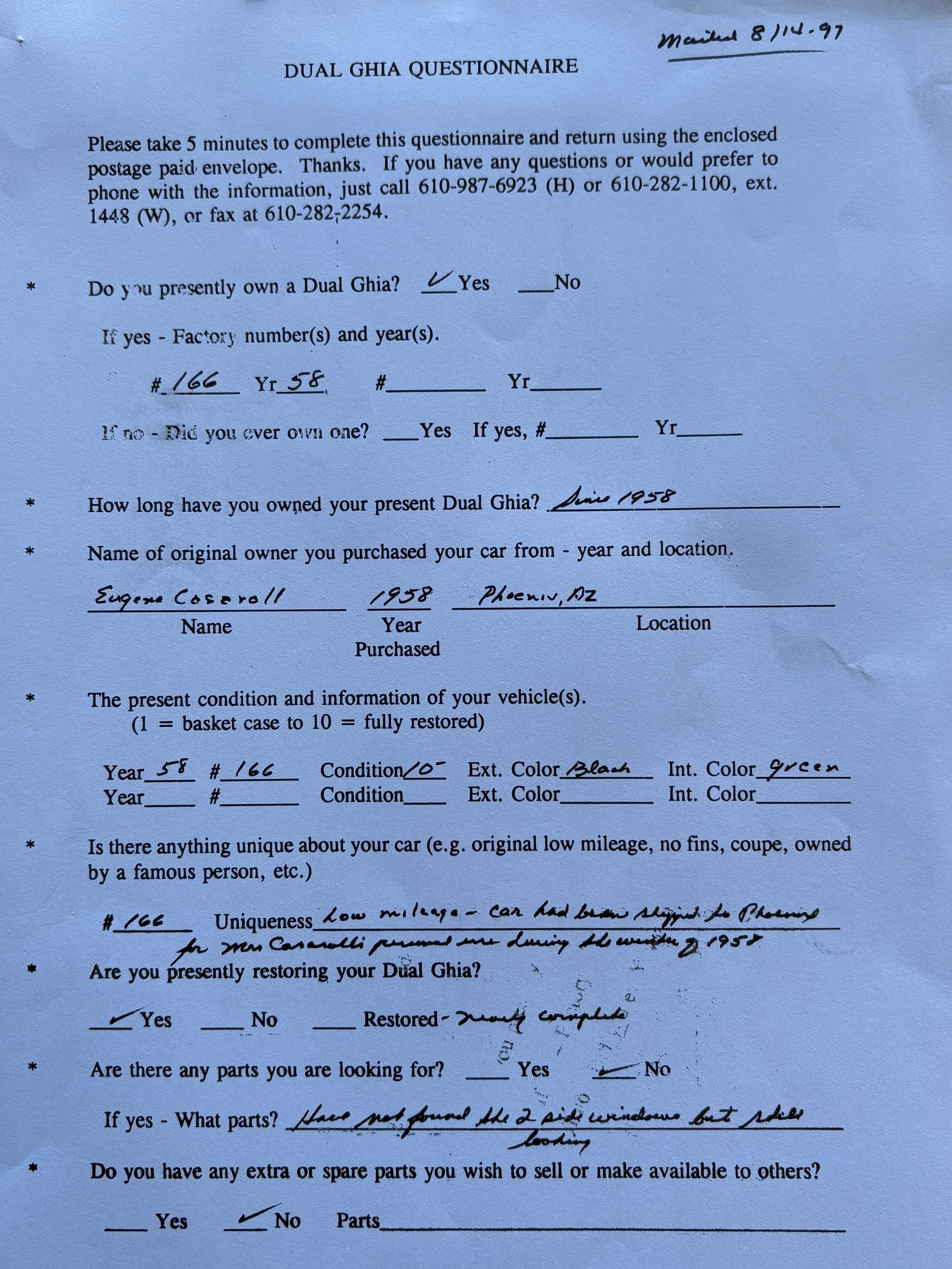
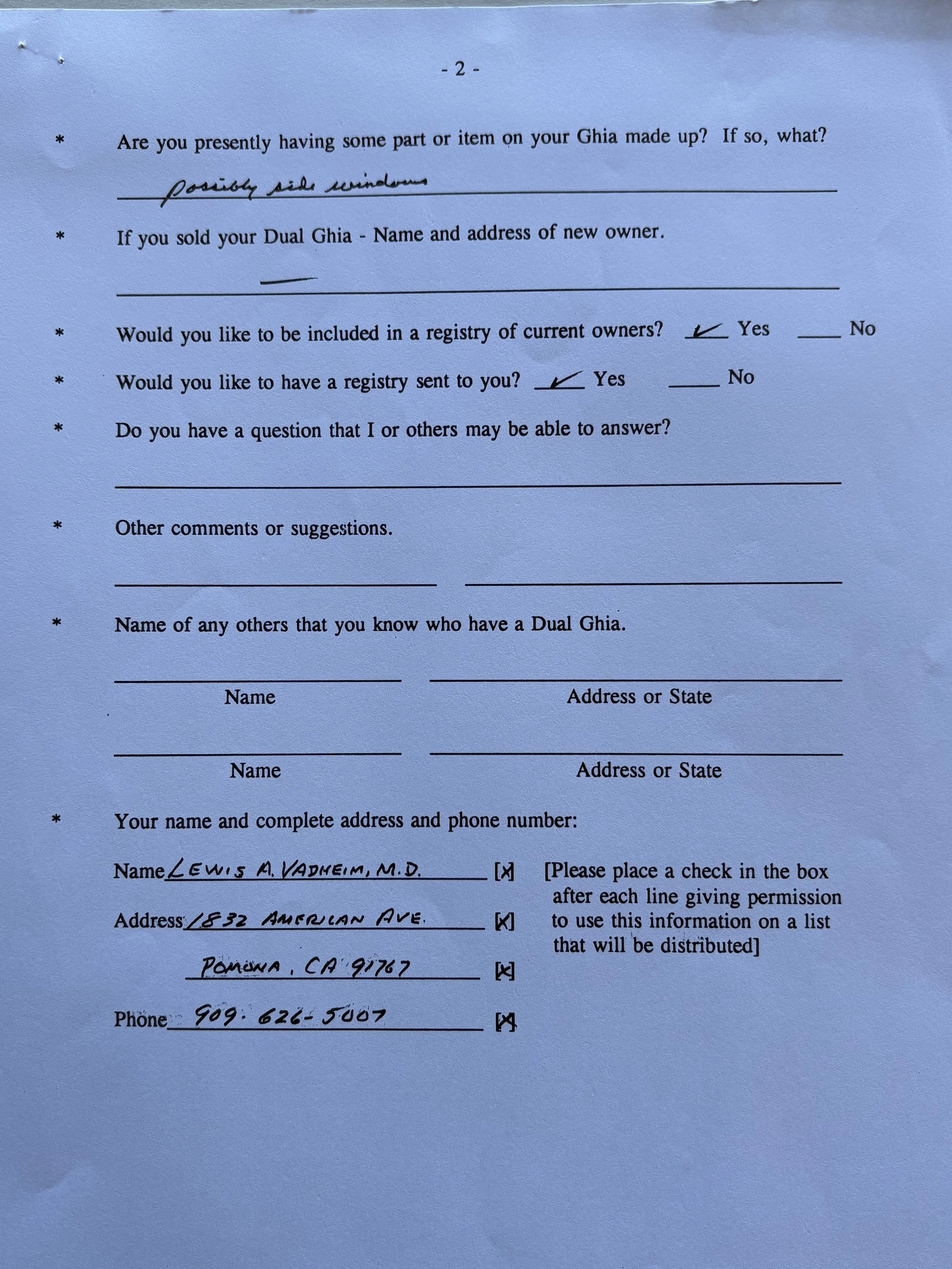
This Dual-Ghia owner questionnaire illustrates Dr. Sable’s meticulous approach to documenting the history of these rare automobiles. Through direct correspondence with owners, Doc Sable collected factory numbers, ownership histories, vehicle specifications, restoration details, and firsthand accounts. This particular questionnaire pertains to #166. These original records became invaluable historical resources for tracing individual automobiles and the foundation for preserving the legacy of the Dual-Ghia.
#166 – An Extraordinary Provenance
The Casaroll Family, Dr. Lewis A. Vadheim, and 65 Years of Preserved History
Few surviving Dual-Ghia automobiles possess a collection of original documentation as historically significant as that accompanying 1958 Dual-Ghia DG-240, serial number 166. Its history connects the automobile directly to the family of Dual-Motors Corporation founder Eugene A. Casaroll, its first private owner, Dr. Lewis A. Vadheim, and an extraordinary collection of factory correspondence and personal records spanning more than four decades.
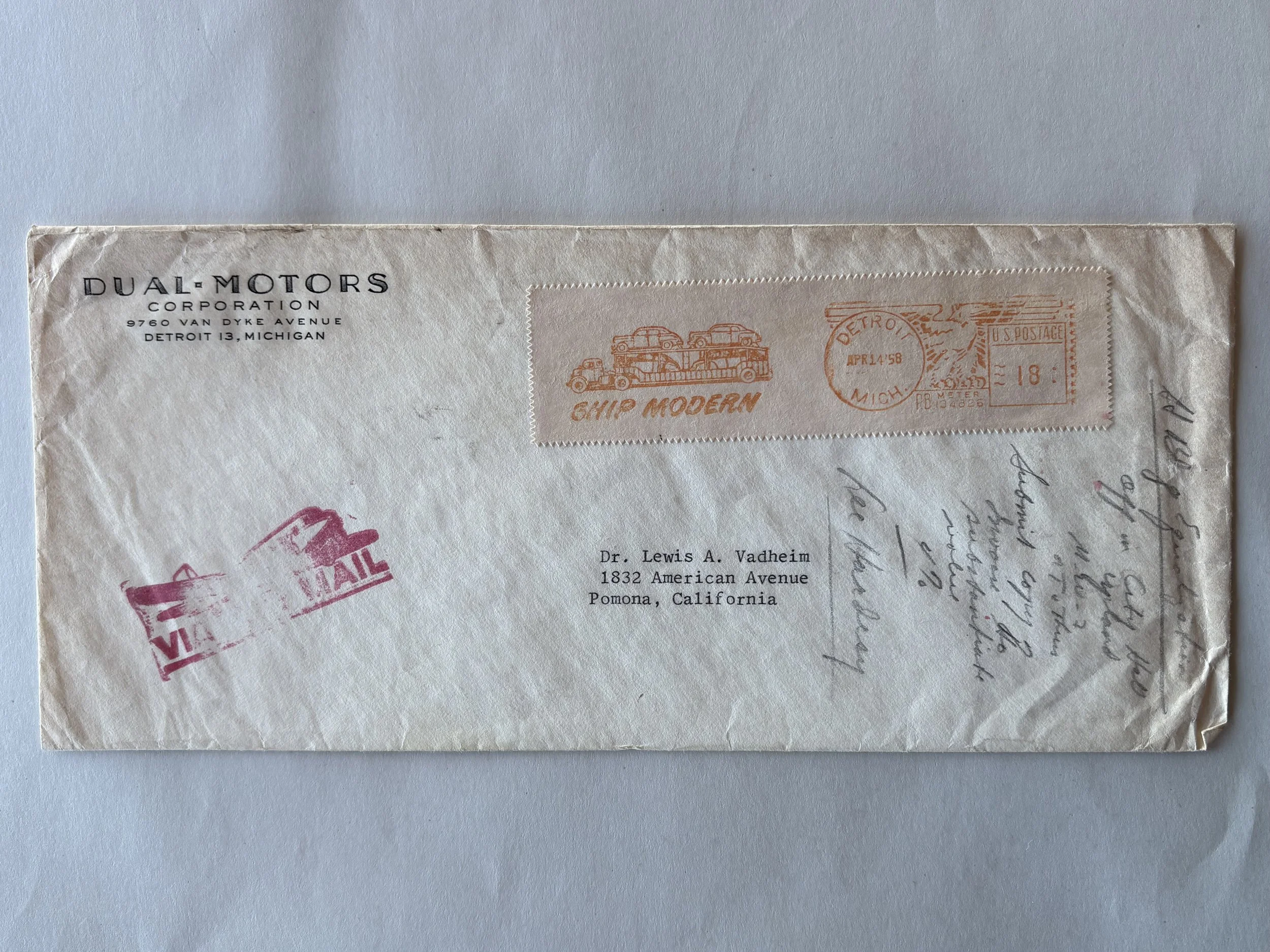
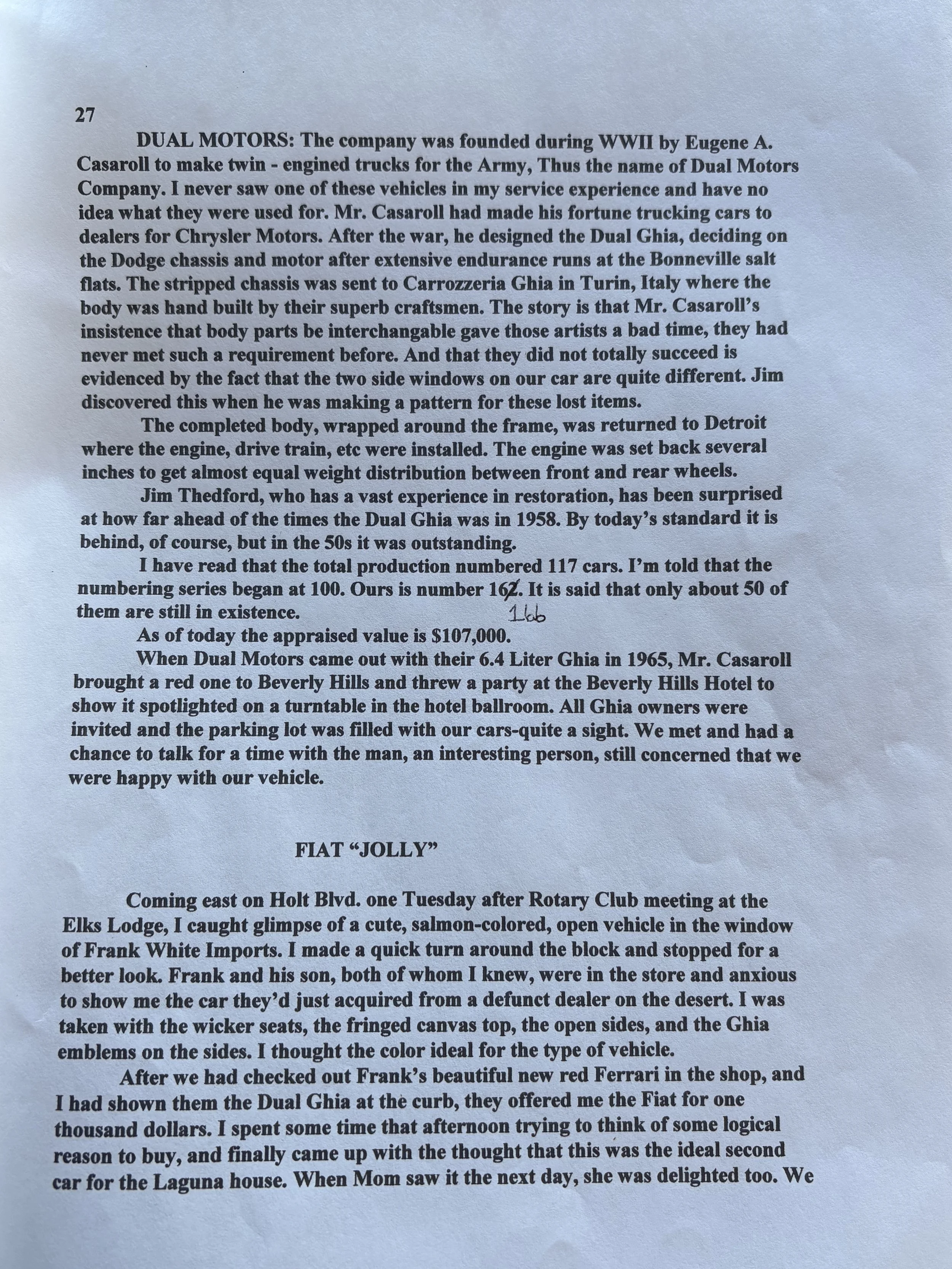
When I purchased #166 from Dr. Vadheim’s son in September 2023, I received an extensive collection of original documents that had been preserved by the Vadheim family. These included Dr. Vadheim’s personal memoir, the original factory sales invoice, two letters personally signed by Eugene Casaroll, a postmarked Dual-Motors envelope, a personalized Dual-Ghia presentation brochure, and an invitation to the 1961 introduction of the Dual-Ghia L6.4.
Together, these materials provide an unusually intimate account of the automobile’s origins, ownership, and enduring relationship with the man who created it.
Originally Built for Mrs. Eugene A. Casaroll
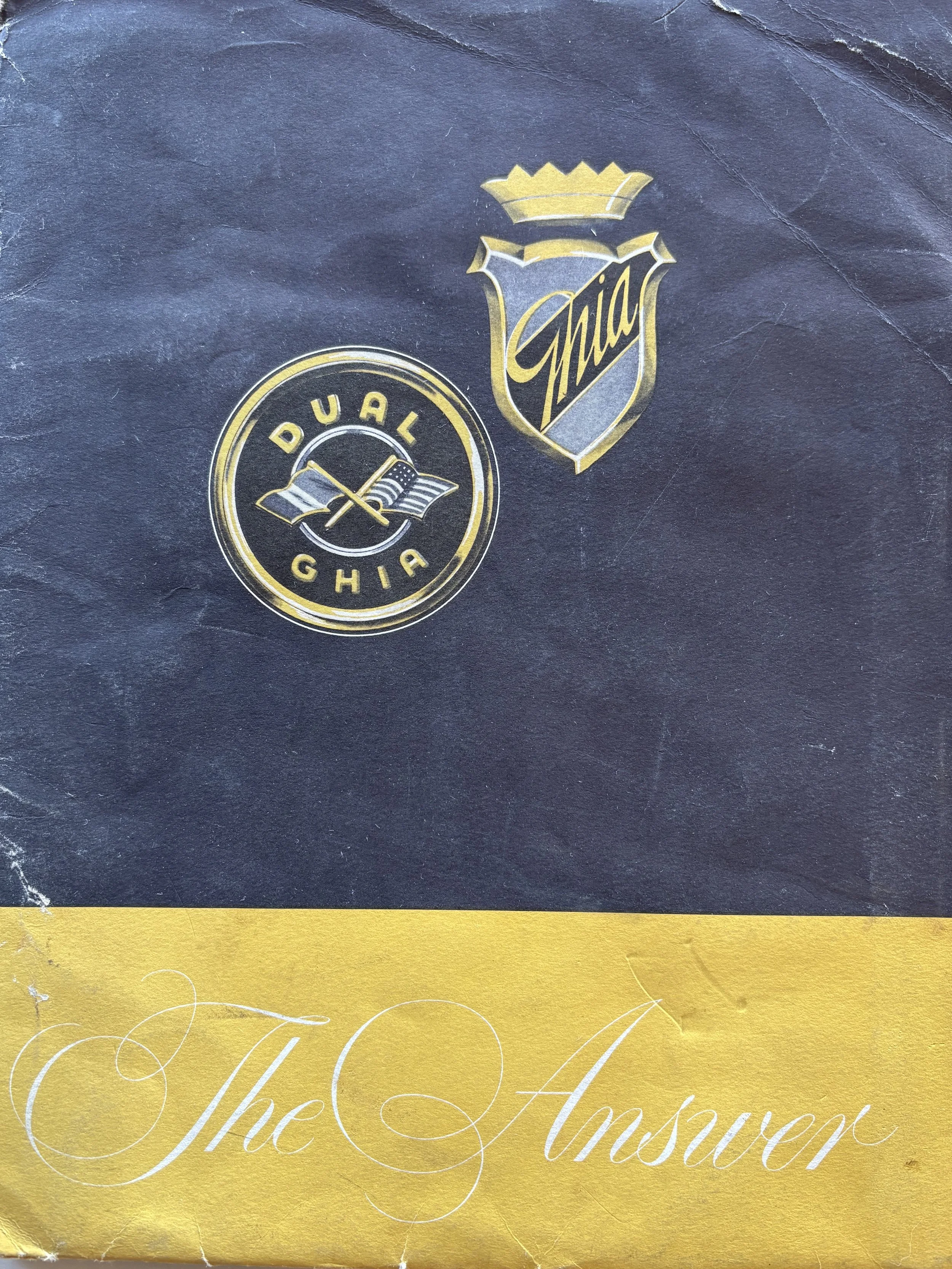
Among the most remarkable surviving documents is an original Dual-Ghia presentation brochure titled The Answer, featuring the Dual-Ghia and Carrozzeria Ghia emblems.
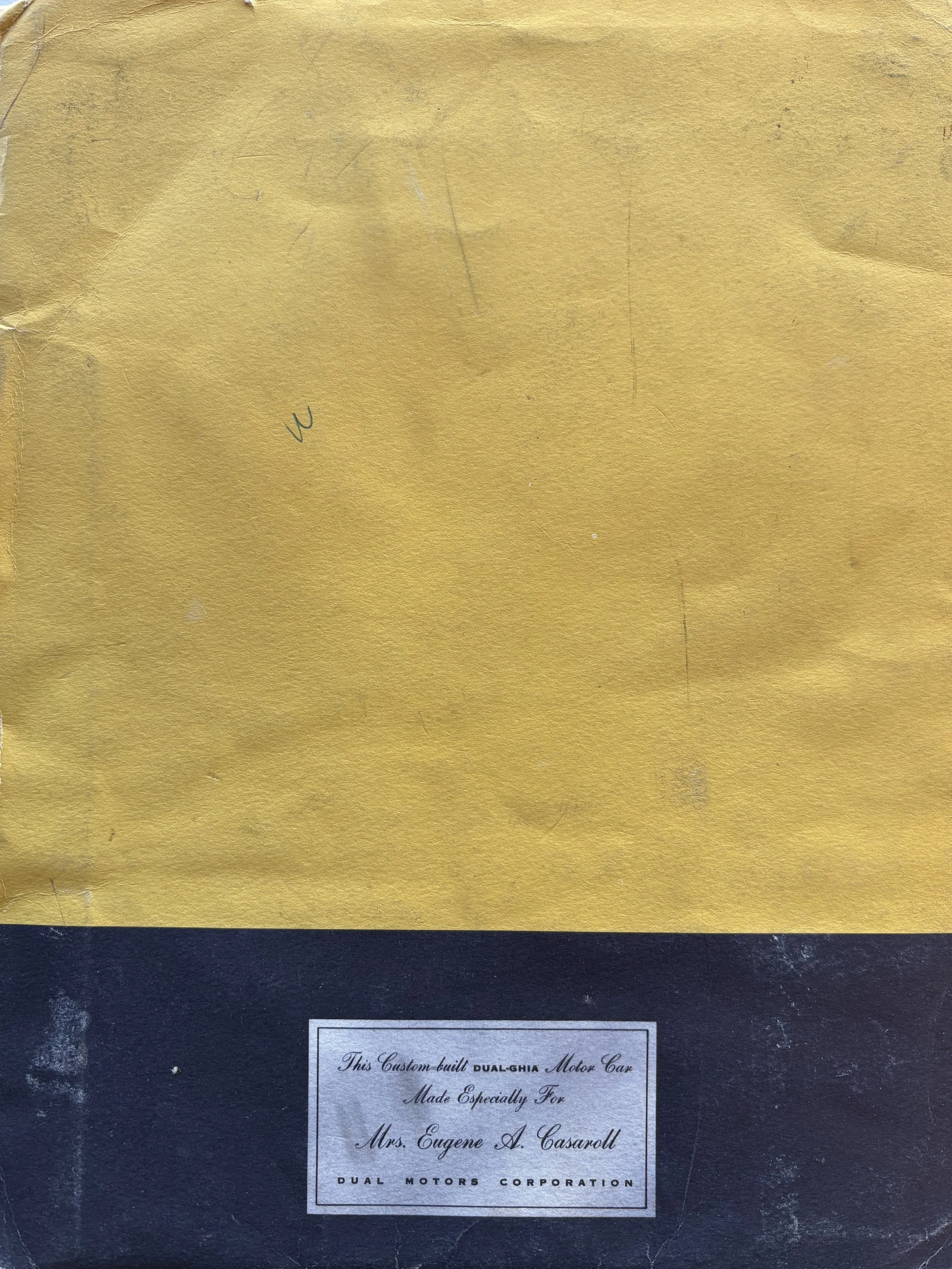
On the reverse is a personalized inscription: “This Custom built DUAL-GHIA Motor Car Made Especially For Mrs. Eugene A. Casaroll.”
The wording and presentation replicate the personalized dashboard plaques supplied for Dual-Ghia owners. This inscription provides compelling evidence that the automobile was originally intended for Mrs. Eugene A. Casaroll, wife of the founder and president of Dual-Motors Corporation.
Dr. Vadheim’s own memoir independently supports this connection. He recounts that the black Dual-Ghia had been sent to Phoenix for Mrs. Casaroll’s use during the preceding winter and was subsequently offered for sale, subject to Eugene Casaroll’s personal approval.
The automobile would later be described on its factory invoice as a demonstrator. The surviving documentation reveals the important distinction: although #166 was sold as a demonstrator, its earlier history was closely associated with the Casaroll family.
The Answer contains 12 original factory promotional pages showcasing the Dual-Ghia four-passenger convertible. These historic promotional materials can be viewed on the Preserving the Legacy page.
Dr. Lewis A. Vadheim — The Original Private Owner
Dr. Lewis A. Vadheim was a distinguished California surgeon, World War II veteran, and longtime resident of Pomona, California. A Mayo Clinic-trained surgeon, Vadheim became the first board-certified surgeon at Pomona Valley Community Hospital, later serving as Chief of Staff and helping establish the hospital’s charitable foundation.
His interest in the Dual-Ghia began in Palm Springs in 1957, when he first encountered the striking Italian-bodied convertible.
In early 1958, through artist Sasha Lautman, who knew the Casaroll family personally, Vadheim learned that Mrs. Casaroll’s black Dual-Ghia was available for purchase. Following discussions and Eugene Casaroll’s approval, Vadheim arranged to acquire the automobile and traveled to Phoenix to take delivery.
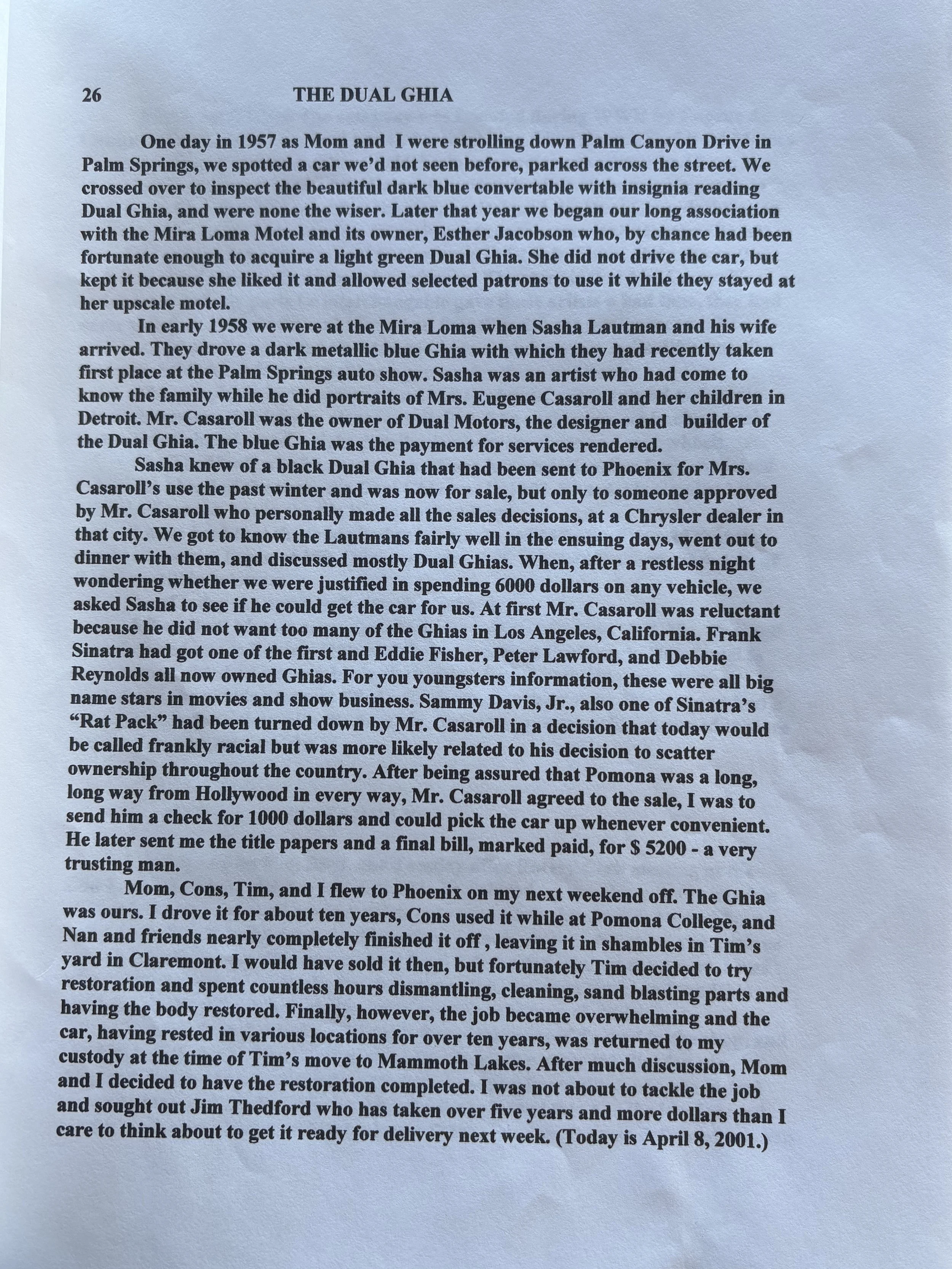
The circumstances of this purchase are preserved in his remarkable firsthand memoir, written on April 8, 2001, more than four decades after the transaction.
The Dual-Ghia, Las Vegas, and the Rat Pack
Tim Vadheim, son of Dr. Lewis A. Vadheim, recalls accompanying his parents to Arizona in 1958 to purchase the Dual-Ghia. His recollection adds a personal dimension to the documented acquisition.
Tim remembers the extraordinary reception his parents received when traveling to Las Vegas in their Dual-Ghia. On more than one occasion, Dr. Vadheim would suggest an impromptu trip to Las Vegas. His wife, Constance, would remind him that they had no hotel reservations. Undeterred, Dr. Vadheim would drive their Dual-Ghia to the famous Sands Hotel and Casino.
According to Tim, when the Dual-Ghia pulled up to the hotel’s valet entrance, attendants would rush to greet its occupants. The automobile was so closely associated with Frank Sinatra, the Rat Pack, and Hollywood celebrities that hotel personnel apparently assumed the Vadheims were members of that circle, or otherwise important guests.
Despite arriving without reservations, the Vadheims would be provided accommodations, dinners, and entertainment, all complimentary, courtesy of the Sands Hotel.
These family recollections illustrate the remarkable prestige of the Dual-Ghia in its era. For the Vadheims, the car was not simply transportation; its presence could open doors normally reserved for celebrated entertainers and their guests.
The Original Factory Invoice — April 14, 1958
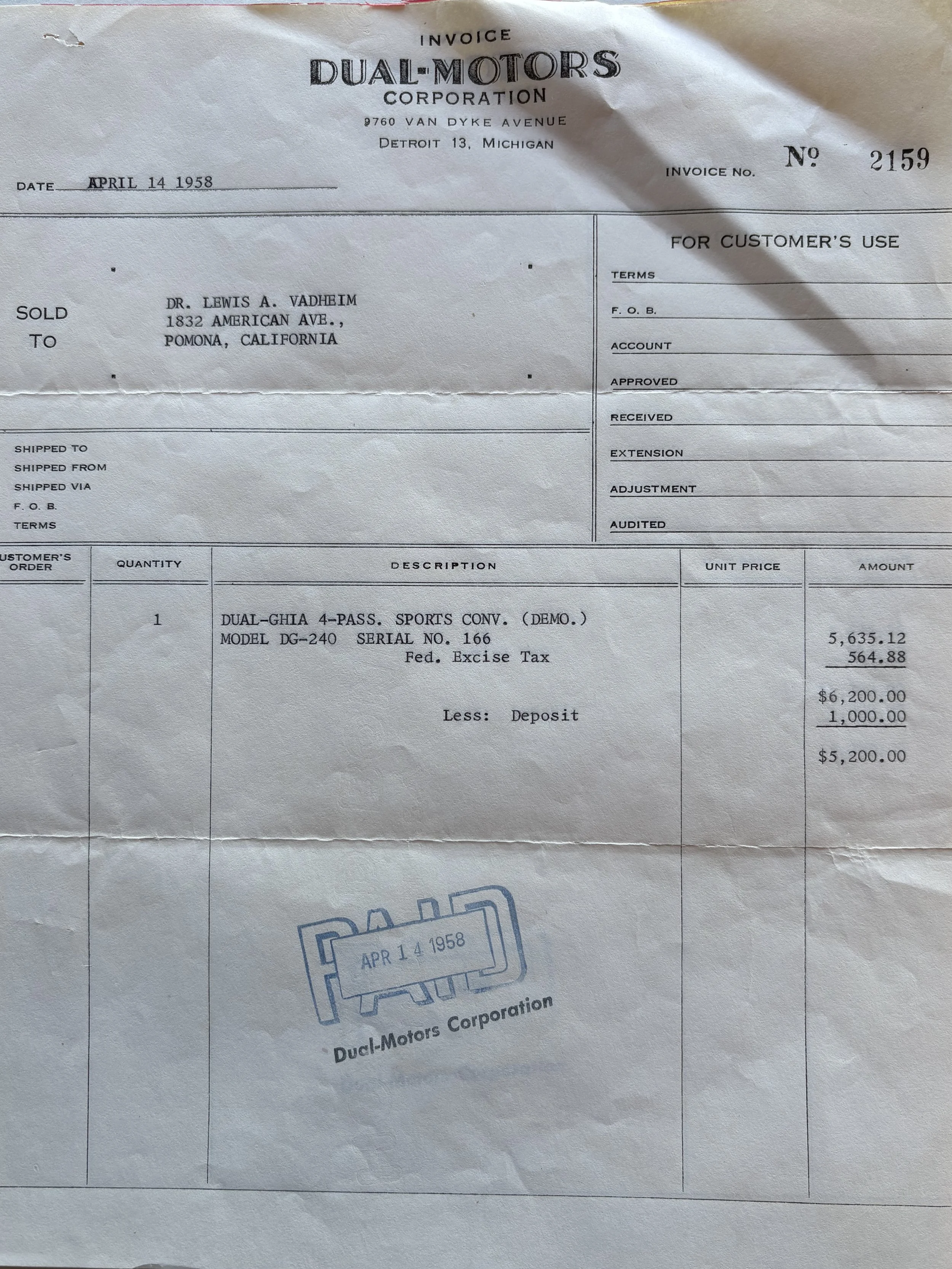
The original Dual-Motors Corporation invoice, No. 2159, dated April 14, 1958, identifies the automobile as “DUAL-GHIA 4-PASS. SPORTS CONV. (DEMO.) — MODEL DG-240 — SERIAL NO. 166.”
Eugene Casaroll’s Personal Correspondence
Two original letters from Eugene A. Casaroll, both bearing his signature, are among the most important documents in the collection.
April 14, 1958 — The Sale and Personal Nameplate
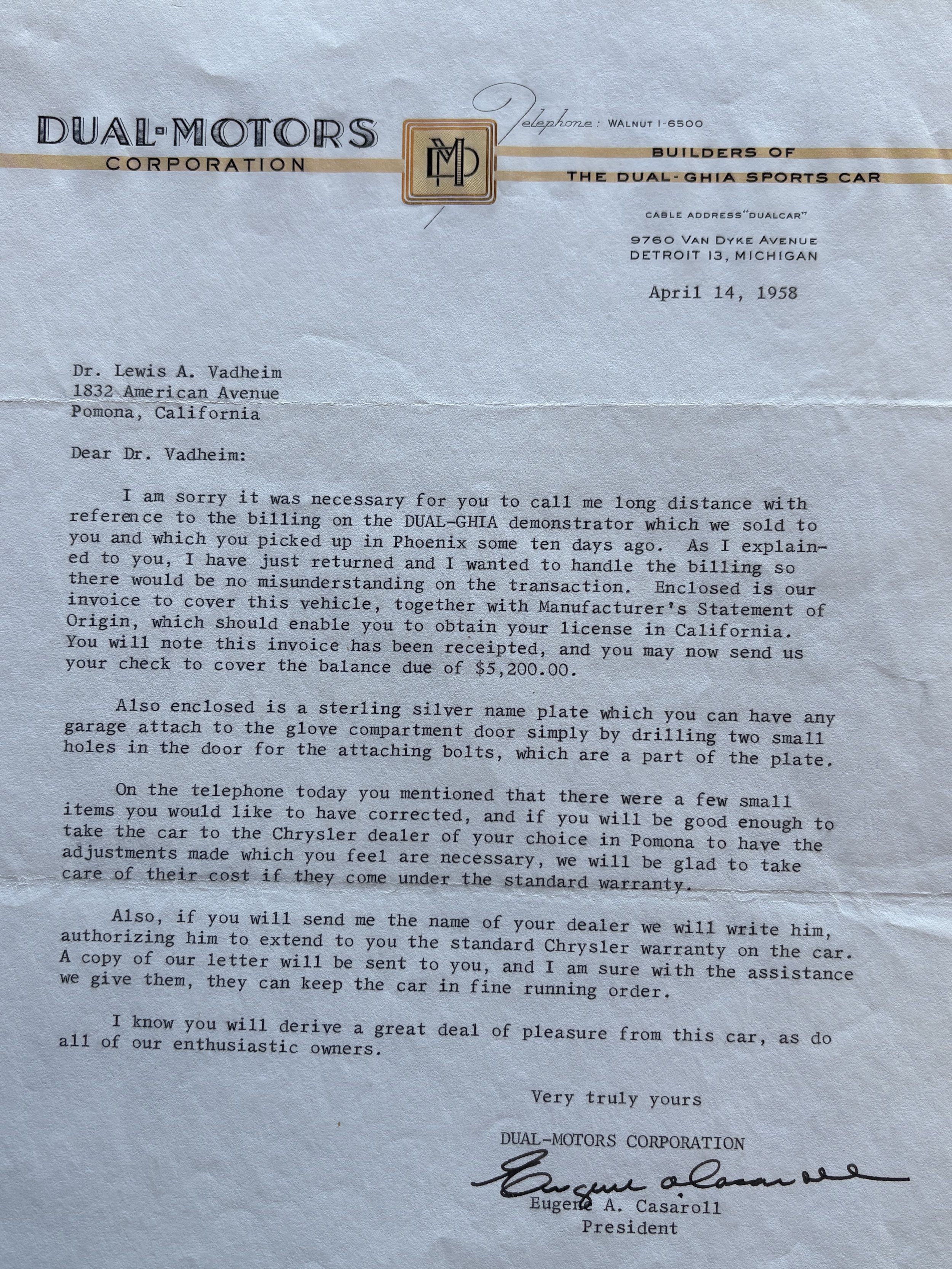
In the first letter, Casaroll acknowledges that Vadheim had collected the automobile in Phoenix approximately ten days earlier. He discusses the invoice, Manufacturer’s Statement of Origin, remaining payment, and arrangements for warranty service through a local Chrysler dealer.
Of particular historical interest, Casaroll writes that he has enclosed a sterling silver nameplate for installation on the glove compartment door, complete with mounting bolts. This passage provides direct factory documentation of the personalized nameplates supplied to Dual-Ghia owners, a tradition reflected in the Mrs. Casaroll inscription preserved on the original presentation brochure.
The letter also demonstrates Casaroll’s personal involvement in customer relations, including his willingness to arrange repairs and communicate directly with Chrysler service personnel on Vadheim’s behalf. Also preserved is a Dual-Motors Corporation envelope addressed to Dr. Vadheim and postmarked Detroit, April 14, 1958.
September 15, 1958 — Paul Farago and Factory Service
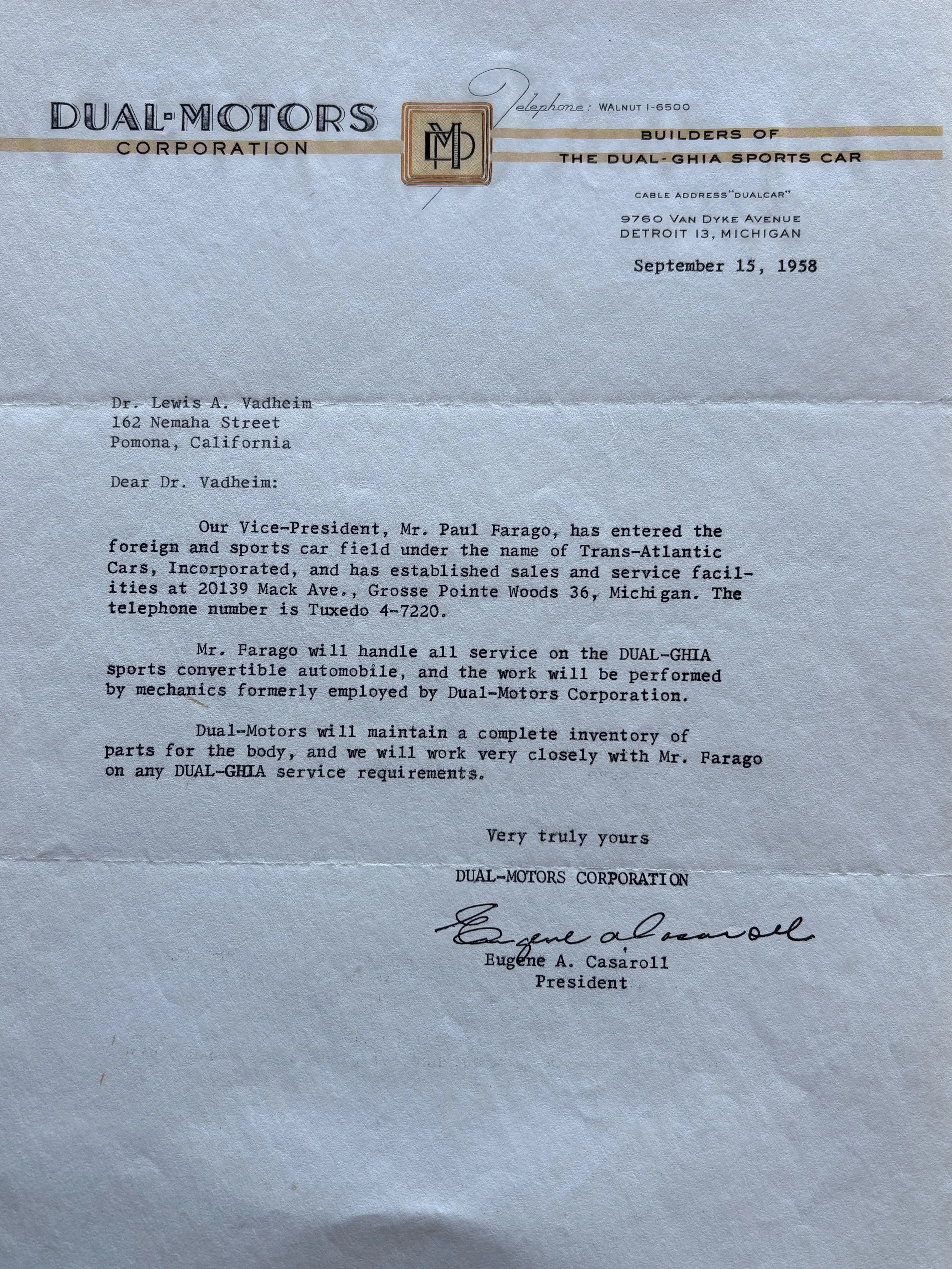
Five months later, Casaroll wrote again to inform Vadheim that Dual-Motors Vice President Paul Farago had established Trans-Atlantic Cars, Incorporated, in Grosse Pointe Woods, Michigan.
Farago would assume responsibility for servicing Dual-Ghia convertibles, employing mechanics formerly associated with Dual-Motors Corporation. Casaroll further confirmed that Dual-Motors would maintain an inventory of replacement body parts and cooperate with Farago in supporting existing owners.
This letter is historically significant beyond #166, documenting the transition of Dual-Ghia service operations in 1958 directly from the company’s president.
The 1961 Dual-Ghia L6.4 Premiere Invitation
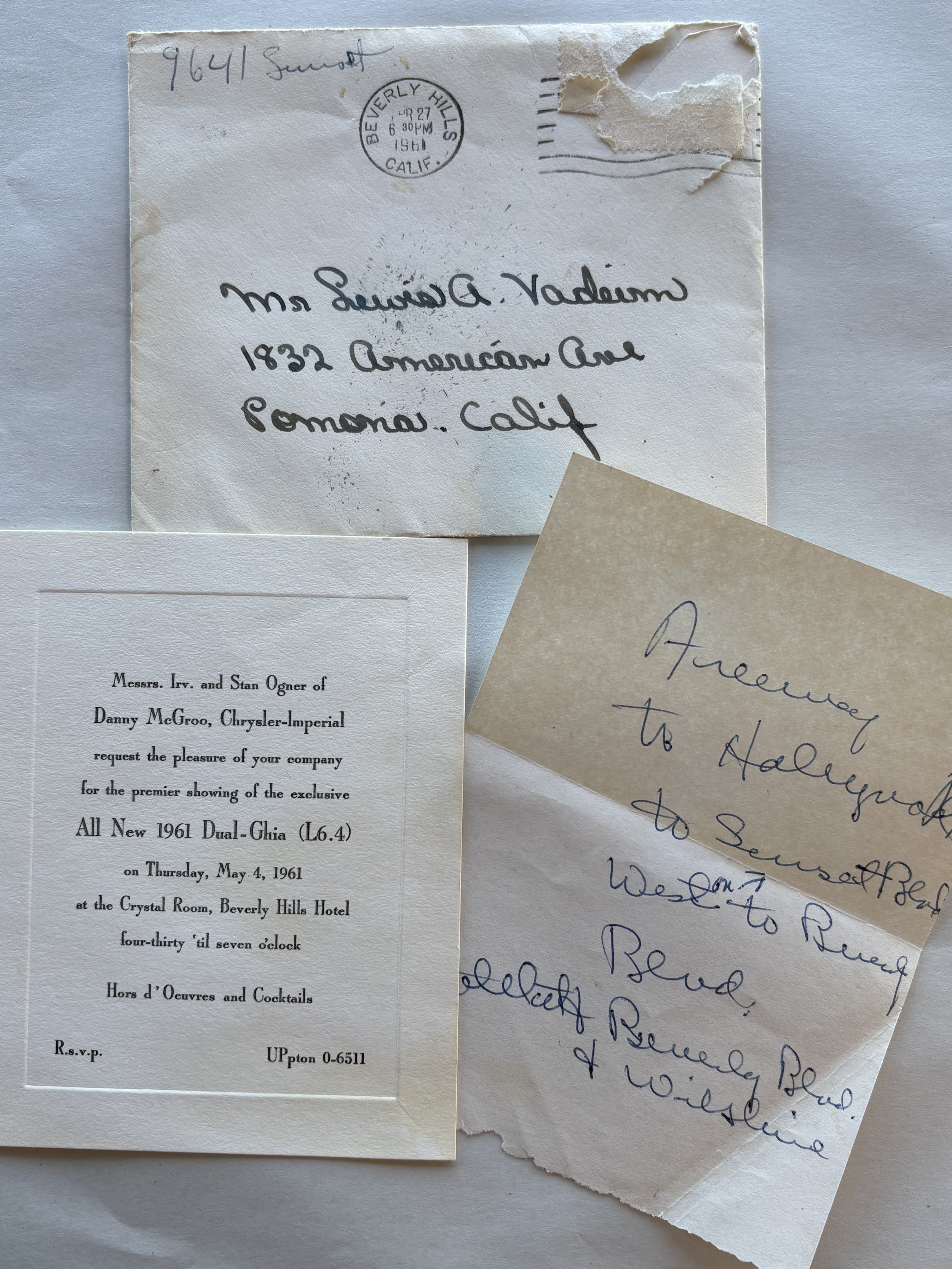
The collection also contains an original invitation addressed to Mr. Lewis A. Vadheim for the premiere showing of the 1961 Dual-Ghia L6.4, held May 4, 1961, at the Beverly Hills Hotel.
Hosted by Irv and Stan Ogner of Danny McGroo, Chrysler-Imperial, the event introduced the next generation of Dual-Ghia automobiles. The invitation demonstrates that the Vadheim family remained connected to the Dual-Ghia community several years after purchasing #166.
In his memoir, Vadheim also recalls attending a later Dual-Ghia gathering at the Beverly Hills Hotel, where he personally met Eugene Casaroll.
Decades of Ownership and Restoration
Dr. Vadheim drove #166 for approximately ten years before the automobile entered a prolonged period of storage and restoration.
His son Tim began the restoration process, undertaking extensive disassembly and preparation. The project was eventually entrusted to Jim Thedford, who spent several years completing the work.
In his memoir, dated April 8, 2001, Vadheim anticipated the automobile’s return following restoration. His account preserves not only the vehicle’s mechanical and restoration history but also personal memories of its purchase, family use, and the individuals involved in its preservation.
September 2023 — A New Chapter
In September 2023, I purchased #166 from Dr. Vadheim’s son, receiving the collection of original documents preserved by the family.
This transfer is especially important to the automobile’s provenance because the documentation accompanied the vehicle from the family of its original private owner to its next custodian.
The collection includes records created at the time of the original transaction, personal correspondence from Eugene Casaroll, and Vadheim’s retrospective account of his ownership. Preserved together, these documents allow the automobile’s history to be reconstructed through original evidence rather than relying solely upon later recollections.
Historical Significance
The provenance of Dual-Ghia #166 is distinguished by the convergence of three exceptional elements: its original association with Mrs. Eugene A. Casaroll, its documented 1958 sale to Dr. Lewis A. Vadheim, and the survival of original factory correspondence and family records.
The personalized Mrs. Casaroll presentation inscription, the factory demonstrator invoice, Casaroll’s signed letters, Vadheim’s memoir, and Tim Vadheim’s oral recollections collectively reveal a history that would otherwise have remained largely unknown.
Dual-Ghia #166 is not simply a surviving example of a rare automobile. It is a documented connection to the Casaroll family, the origins of Dual-Motors Corporation, and the personal history of one of its earliest private owners.
The preservation of these original materials represents an invaluable contribution to the historical record of the Dual-Ghia and to the continuing research of the Dual-Ghia Registry.